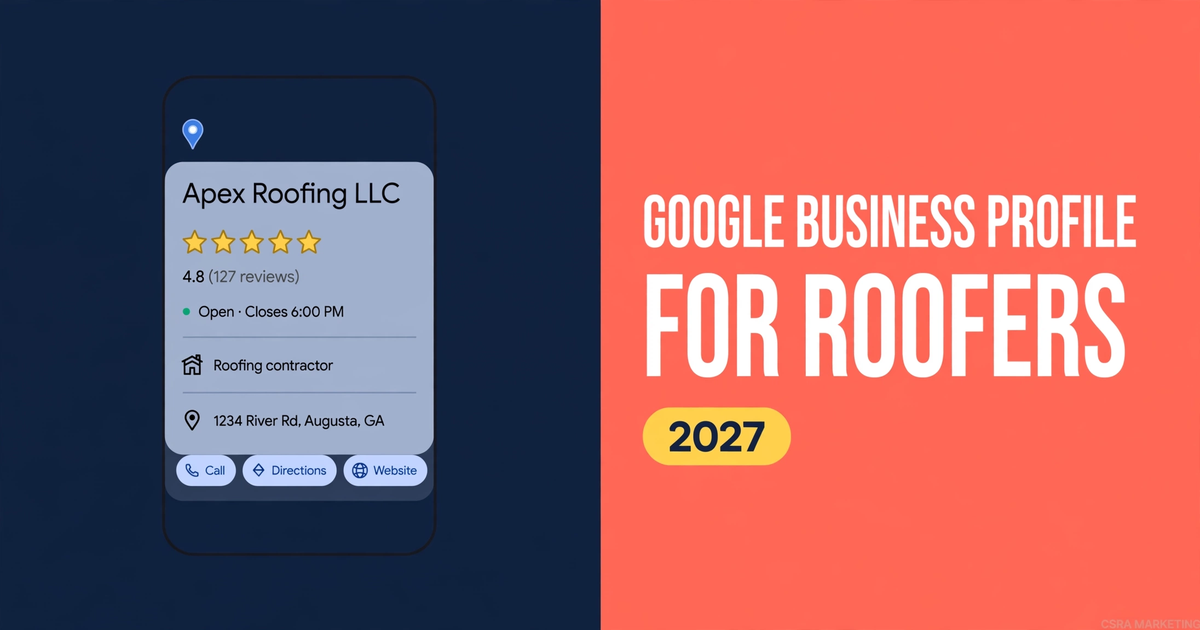
Your Google Business Profile is free. It shows up before your website does.
Most roofers treat it like a directory listing. Fill in the name, toss up a logo, forget it exists. That costs them calls they never knew they lost.
The roofers who treat it like a second homepage get the calls. This guide shows you what to set up and why each piece matters.
Before you start, run your current lead costs through this free comparison tool so you know what a free call from your profile is actually worth.
Chapter 01
Your Google Business Profile Is Your Second Homepage
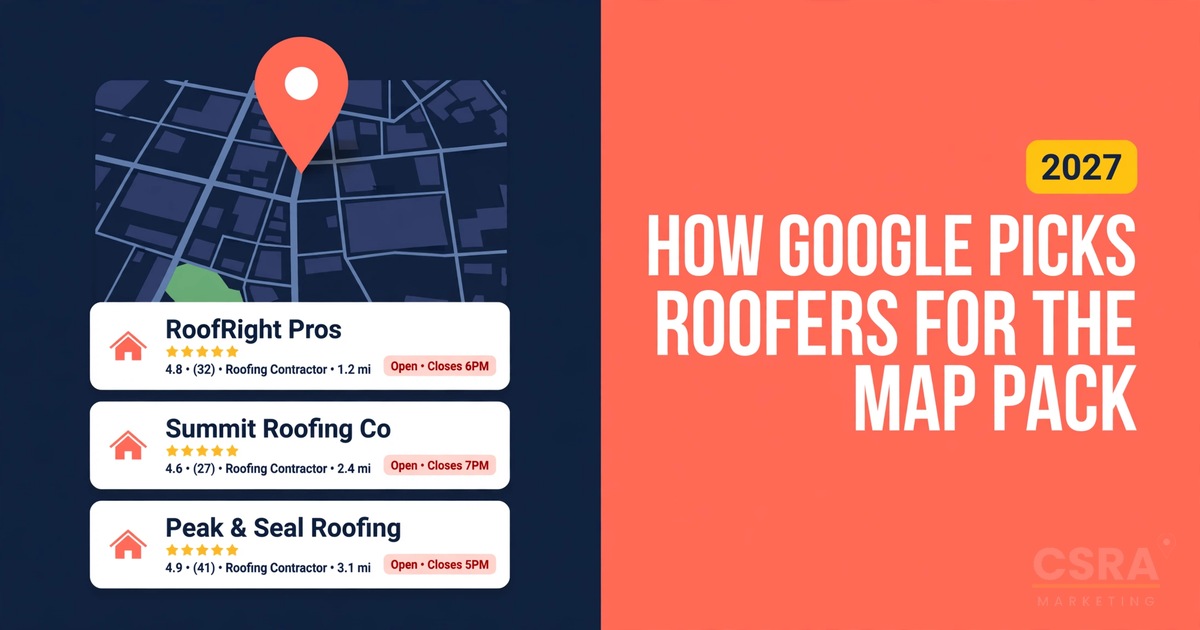
When a homeowner searches "roofer near me," Google shows them three things before anything else: the map, the three business listings, and your star rating.
That listing is your Google Business Profile. For most homeowners, it is the first impression of your company.
Your website might be beautiful. It does not matter if the homeowner never clicks past your profile.
Why?
Because the profile answers the three questions a homeowner asks in about ten seconds: are you close, do you look legit, and what do other people say about you.
A thin profile with no photos, three reviews, and a missing phone number answers those questions badly. The homeowner clicks the next listing. You never knew they existed.
The fix is not complicated. You just fill in what most roofers skip. Every section of your profile is a small trust signal, and they stack.
Local SEO is the system that gets you ranked in the first place. Your profile is where those rankings pay off.
Chapter 02
Pick the Right Business Category (This Is the #1 Relevance Signal)
Google needs to know what you do before it can show you to the right searchers. The primary business category is how you tell it.
What to do: Set your primary category to "Roofing Contractor." Then add secondary categories for the other work you actually do: "Roof Repair Service," "Gutter Cleaning Service," "Siding Contractor," whatever fits.
Why it matters: Google's own documentation lists your business category as part of the relevance signal it uses to match you to searches. A roofer categorized as a "General Contractor" is telling Google to show them for kitchen remodels too, which wastes impressions and muddies the signal.
Here is the part most roofers miss: you can only have ONE primary category. Make it the work that brings in the most revenue. Everything else goes in secondary.
Google confirms categories are a ranking factor in its guide to improving your local ranking.
Chapter 03
Set Your Service Area, Not Just Your Address
Most roofers serve a radius, not a storefront. Google lets you set it up that way.
What to do: If customers do not come to your office, hide your street address and define your service area instead. List every city and town you will actually drive to for a job.
Why it matters: Two reasons. First, a service-area setup matches how your business actually works, and Google rewards accuracy. Second, your service area feeds the relevance signal. A homeowner in Evans searching for a roofer is more likely to see you if Evans is in your listed service area.
Listing cities you would never drive to does not help. It just sets you up for bad reviews from homeowners you cannot serve well.
Service areas are one of the three things Google weighs when it decides who to show. I break down all three in what local SEO actually is for roofers.
Chapter 04
Photos That Make Homeowners Call You Instead of the Next Guy
A profile with no photos looks abandoned. A profile with good photos looks like a company that is busy doing work right now.
What to add:
- Your crew on a roof. Real people doing real work. This is the single highest-trust photo type for a roofing company.
- Before and after shots. A torn-up old roof next to a clean new install tells the whole story in two seconds.
- Your trucks and signage. Branded vehicles signal "established company," not "guy with a ladder."
- Your actual office or shop, if you have one. Even a small one. It proves you are real.
You do not need a photographer. A phone shot of the finished ridge line before you pack up takes thirty seconds.
Why?
Homeowners are hiring a stranger to climb on their house. Every photo that shows real people, real equipment, and real finished work lowers the perceived risk of calling you.
Upload new photos regularly. A profile whose newest photo is from 2021 looks like a company that might not be around anymore. Your profile photos work the same way your website photos do. I break down the full trust-signal checklist in my roofing website must-haves guide.
Know What Each Lead Is Really Costing You?
A complete profile brings in free calls. But do you know what you are paying for the leads you buy? Run the numbers.
Compare Your Lead CostsChapter 05
Reviews Live on Your Profile, So Make It Easy to Leave Them
Your star rating shows up right on your profile, next to your name, in every search. It is the most visible trust signal you have.
What to do: Build a simple habit: after every finished job, while the homeowner is happy and you are still on site, ask for a review and make it easy. A short link they can tap. Nothing more complicated than that.
Why it matters: Review count, average rating, and recency all feed into whether Google shows you in the top three. But the bigger reason is the homeowner reading them. In most markets, a roofer with 120 recent reviews wins the call over a roofer with 12 old ones, even at the same rating. Volume and recency both matter.
Respond to every review, good and bad. A thoughtful response to a bad review tells future homeowners more about your character than ten five-star reviews do.
Reviews are one of the three ranking factors Google weighs for the Map Pack. Here is how Google decides which roofer to show.
Lost Revenue Calculator
Drag the sliders to your own numbers and see what missed searches cost in jobs you never hear about.
Chapter 06
The Q&A Section Most Roofers Ignore (And Competitors Exploit)
Every Google Business Profile has a Questions & Answers section. Anyone can ask a question on your profile. Anyone can answer it too, including people who are not you.
What to do: Seed the section yourself. Post the questions homeowners actually ask ("Do you offer free estimates?" "Are you licensed and insured?" "What areas do you serve?") and answer them in your own words.
Why?
If you do not fill this section, someone else will. A competitor, a confused past customer, or a random stranger can answer questions on YOUR profile, and their answers sit there until you notice.
This takes twenty minutes, once. And every answered question is one less reason for a homeowner to click the next listing.
Chapter 07
Keep It Fresh or Google Assumes You Closed
A profile you set up once and never touch sends a quiet signal: this business might not be active anymore.
What to keep current:
- Hours, especially holiday hours. Nothing kills trust faster than driving to a closed shop.
- Posts. Google lets you publish short updates right on your profile: completed jobs, storm damage reminders, seasonal offers. One or two a month is plenty.
- Services and pricing info. If you add metal roofing this year, add it to the profile the same week.
Why it matters: Google's documentation notes that complete, accurate profiles are more likely to appear in local results. But even setting rankings aside, a homeowner who sees a post from last week trusts you more than one whose profile has been silent since 2022.
None of this pays off overnight. Here is how long roofing SEO actually takes to generate leads, so you know what to expect while your profile compounds.
Your Next Step
Your Google Business Profile is the highest-return asset on your list. It is free to run, it shows up before your website, and most of your competitors have a thin one.
Work through the seven sections above this week. Then run a website audit and I will show you exactly where your profile and site stand. Or book a 30-minute consultation and I will walk through it with you.